射雕英雄传
China proceeds legislation against cross-border corruption, closing legal gap in overseas probe, fugitive hunt and asset recovery: expert_我的网站

A |
Chinese lawmakers began reviewing a draft law on combating cross-border corruption on Tuesday, a legislation which experts believe would help close legal gaps in investigating overseas corruption, pursuing fugitives and recovering illicit assets, while strengthening international cooperation and corporate compliance.
The draft was submitted for its first reading to the ongoing session of the Standing Committee of the National People's Congress, the country's top legislature, per Xinhua News Agency.
Huo Zhengxin, a professor at the China University of Political Science and Law, told the Global Times that the draft law represents a dedicated piece of legislation within China's anti-corruption legal framework and a major step forward in the country's law-based governance of foreign-related affairs. It will fill a legislative gap in combating cross-border corruption, Huo said.
As Chinese companies expand business overseas, cross-border corruption cases face challenges in obtaining evidence abroad, pursuing fugitives and recovering illicit assets. Existing anti-corruption laws have faced limitations in addressing such cases involving foreign affairs, making such dedicated legislation necessary, Huo said.
Structured into six chapters and 47 articles, the draft sets out the principles, scope and key provisions underpinning China's efforts to combat cross-border corruption. It also defines relevant operational mechanisms and institutional responsibilities, and seeks to strengthen case handling and international cooperation.
The draft further clarifies enterprises' obligations regarding integrity and compliance, and specifies legal liabilities for violations.
As one of the experts involved in drafting the legislation, Huo said a key innovation of the draft is to strengthen international cooperation and corporate integrity and compliance obligations. As evidence, suspects and illicit assets in cross-border corruption cases are often located overseas, the draft provides mechanisms including extradition, mutual legal assistance and repatriation, while aligning with relevant rules under the UN Convention against Corruption (UNCAC), said the expert.
The draft also makes clear that Chinese companies operating overseas, including both state-owned and private enterprises, have legal obligations to uphold integrity and compliance with domestic laws, Huo said.
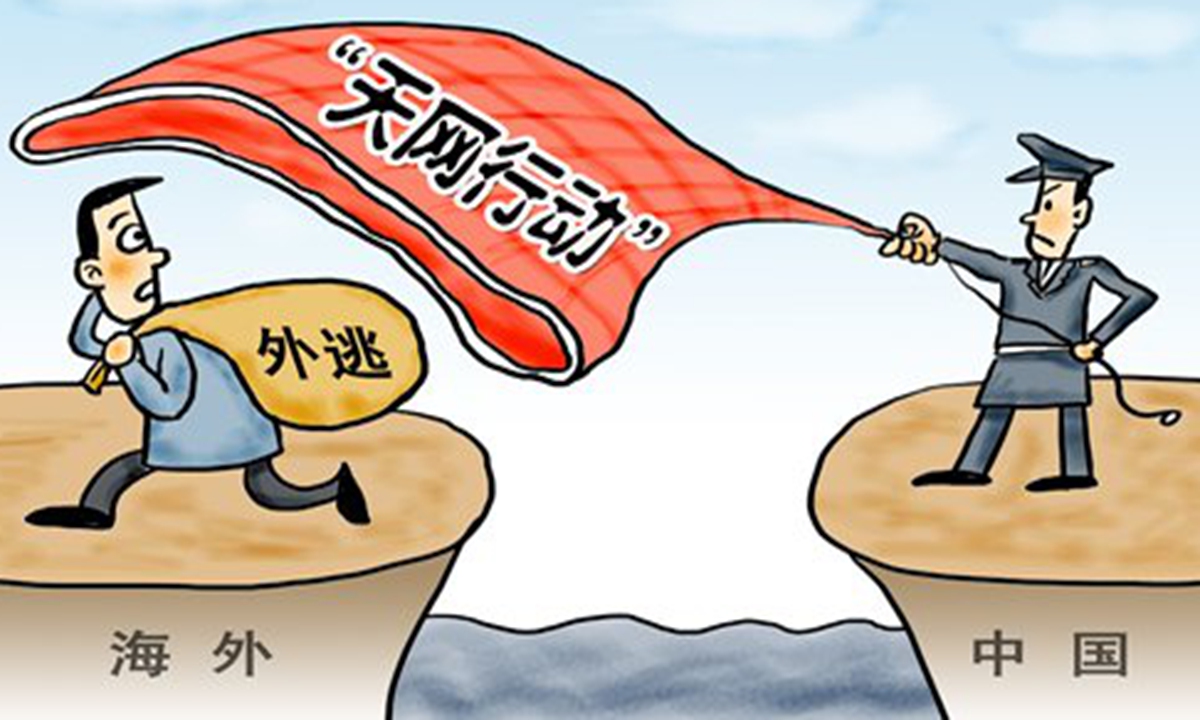
The legislation would also codify practices accumulated through China's past campaigns against cross-border corruption, such as Sky Net and Fox Hunt operations, turning them into a more systematic legal framework and strengthening the law's deterrent effect, according to Huo.
The draft law is a practical step to regulate the development of cross-border businesses and help build a world-class business environment aligned with market principles, the rule of law and international standards, Xinhua noted.
It is also expected to expand the legal tools available to combat cross-border corruption and help address challenges in detecting corruption, collecting evidence, recovering illicit assets and securing convictions, according to the report.
In January, CCTV News reported on the case of a former senior executive of China National Offshore Oil Corporation, who was accused of accepting large amounts of bribes that were concealed overseas, with a businessman allegedly acting as a "front" to collect the illicit payments.
The draft's explicit corporate integrity and compliance requirements would make it harder for individuals to disguise bribery and other corrupt practices through overseas projects in an attempt to circumvent domestic oversight, while further clarifying the extraterritorial reach of China's anti-corruption laws, Huo said.
The draft also contains provisions to counter the use of foreign countries' domestic anti-corruption laws to exercise "long-arm jurisdiction" over Chinese companies, which Huo described as another important innovation in China's foreign-related legal framework.
China has been deepening its efforts in international anti-corruption cooperation, with 963 corrupt fugitives repatriated to the country in 2025, according to a work report from the country's top anti-graft body, Xinhua reported.
。 《黄昏血族》是一款由From Software制作并发行的多人动作角色扮演游戏,由宫崎英高担任总监,将于2026年内发售,登陆Switch 2平台。 据GamesRadar+报道,近日在接受采访时,宫崎英高表示,他希望《黄昏血族》在设计角色时采取更加宽泛的思路。他并不希望设计受到传统吸血鬼或怪物概念的限制,而卓克(下图)这样的设计恰恰完美诠释了他的设计理念。 虽然比起其他角色,卓克看起来相对笨重、不太雅致,但实际上,在《黄昏血族》测试期间,卓克的人气可一点也不低,他的武器是海底电缆和鱼枪,技能则是潜水服背部的导弹和利用喷气背包将自己发射出去的头槌,虽然攻击动作笨重但伤害极高。 宫崎英高表示,他不希望玩家将本作的的角色简单地理解为“吸血鬼”一样的角色:“在这款游戏中,玩家角色并不是吸血鬼。我们不希望他们仅仅被塑造成怪物,而是希望给人一种感觉,让他们成为拥有智慧、哲学思想、文化和历史的一个种族。” 他补充表示:“拥有传统概念确实很重要,但我认为在角色设计方面,我们应该采取更加宽泛的思路。如果你看看卓克,我想你就会很容易理解这一点。”本文由游民星空制作发布,未经允许禁止转载。更多相关资讯请关注:黄昏血族专区。
Current article:http://d8k7.recuigoutoubaozukai.pics/news/20260826_1378282.html
Published on:17:45:14